





Home Reed Diffuser Guide: Getting Better Scent Throw, Longer Life, and Cleaner Placement
 Home Reed Diffuser Guide: Getting Better Scent Throw, Longer Life, and Cleaner Placement
Reed diffusers are popular because they scent a room quietly and continuously—no flame, no electricity, and no “on/off” scheduling. But the performance can vary widely depending on reed quality, room airflow, and where the bottle is placed.
If you want more predictable results, it helps to understand how a home reed diffuser actually works and what factors influence scent throw and lifespan.
How reed diffusion works (in plain terms)
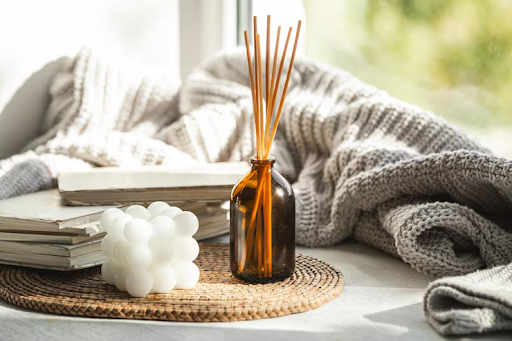
Reeds act like tiny channels. They pull fragrance oil up through capillary action and release it into the air.
What controls scent intensity
- Oil viscosity (thicker oils travel slower)
- Reed material and number of reeds
- Room size and airflow
- Temperature and humidity
More reeds isn’t always better
Adding reeds can increase throw, but it can also burn through oil faster. The best balance depends on the room.
Choosing the right diffuser strength for each room
Smaller rooms
Bathrooms and small bedrooms often need fewer reeds and lighter profiles. Too many reeds can make the scent feel heavy.
Larger rooms
Open living areas usually need:
- More reeds, or
- A stronger fragrance profile, or
- Strategic placement where airflow carries scent outward
Think “air movement,” not “centre of the room”
Diffusers perform best where air naturally circulates—near (but not directly in) pathways of airflow.
Placement tips that improve throw and reduce mess
Avoid direct sunlight and heat sources
Heat can increase evaporation and shorten lifespan. Sunlight can also affect fragrance balance over time.
Choose a stable, low-risk surface
Place the bottle on a tray or coaster to protect wood and porous surfaces from accidental drips.
Keep away from high-traffic edges
Diffusers near corners of tables or narrow shelves are more likely to be knocked over.
Maintenance: what to do (and what not to do)
Flip reeds on a schedule
Flipping reeds can refresh throw, but it also increases consumption. Start with occasional flips and adjust based on performance.
Replace reeds when performance drops
Over time, reeds can clog with dust and oil residue. If throw declines even with flipping, new reeds often restore performance.
Don’t “top up” with random oils
Mixing oils with different viscosities can change how the diffuser wicks and may create inconsistent scent output.
How long should a reed diffuser last?
Lifespan depends on bottle size, reed count, and environment. Warm, dry rooms with lots of airflow typically consume oil faster than cool, stable rooms.
A practical way to extend lifespan
Use fewer reeds in smaller rooms, avoid heat sources, and flip reeds only when throw noticeably fades.
Scent selection: what feels “right” over time
Because diffusers run continuously, choose scents that you can live with daily.
Balanced profiles work best
Very sweet or intensely spicy notes can become tiring when constant. Many people prefer:
- Clean, fresh profiles for shared spaces
- Softer blends for bedrooms
- Crisp profiles for kitchens and entryways
Natural” doesn’t have to mean weak
People often use the term natural reed diffuser to describe a cleaner-feeling scent experience, but performance still depends on the oil blend and reed setup. A well-matched oil-to-reed system can deliver a strong, steady throw without feeling sharp.
Safety considerations for homes with kids and pets
- Place diffusers out of reach and away from wagging tails
- Avoid direct contact with skin and eyes
- Clean spills quickly and dispose of used reeds thoughtfully
- Use in well-ventilated rooms
Conclusion
A home reed diffuser is at its best when it’s treated like a small system: oil + reeds + placement + airflow. Choose the right reed count for the room, avoid heat and direct sun, flip reeds sparingly, and replace reeds when throw fades. With a few practical adjustments, reed diffusers become a reliable, low-maintenance way to keep a space gently fragranced all day.